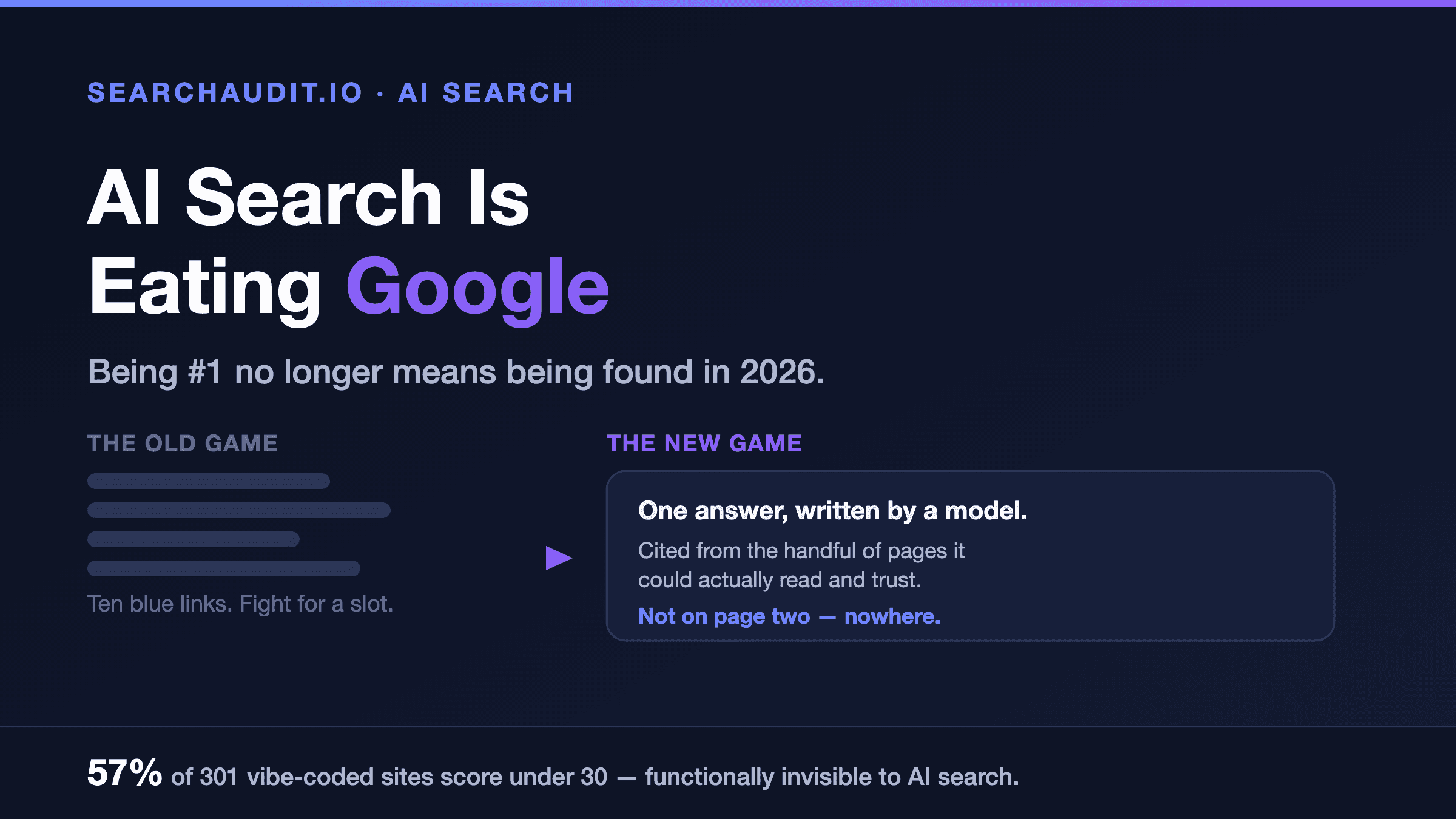
When you ask ChatGPT or Perplexity a question, you get an answer with a few sources named inside it. Not ten links to compare — a synthesis, with maybe one to three citations. We've written about how that shift breaks the old SEO assumptions. This piece is about the mechanic underneath it: out of the whole web, how does the model decide who to name?
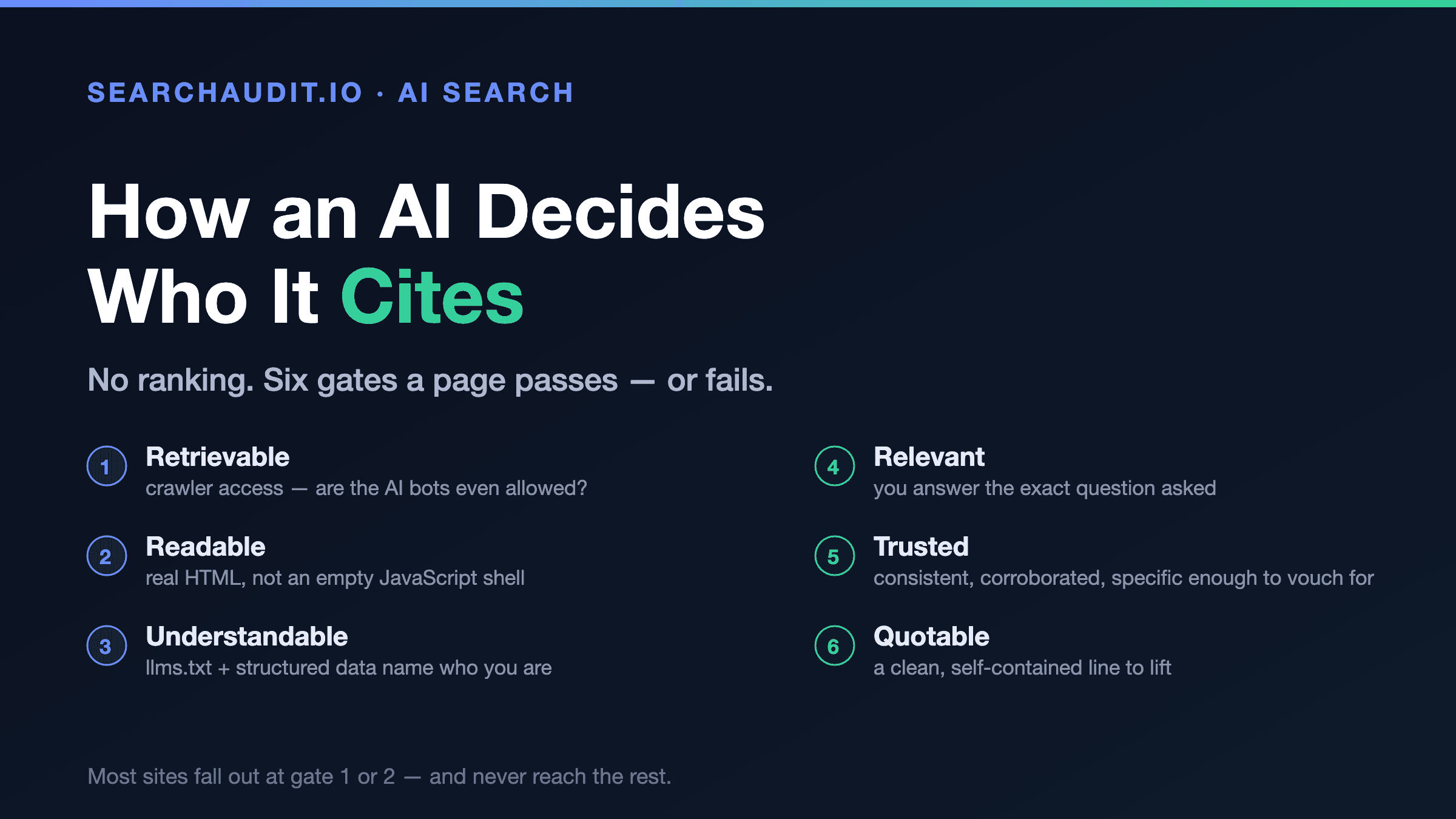
It's not a ranking. There's no single leaderboard. It's closer to a series of gates a page has to pass, and dropping out at any one of them means you're not in the answer. Here are the six, in the order they tend to matter.
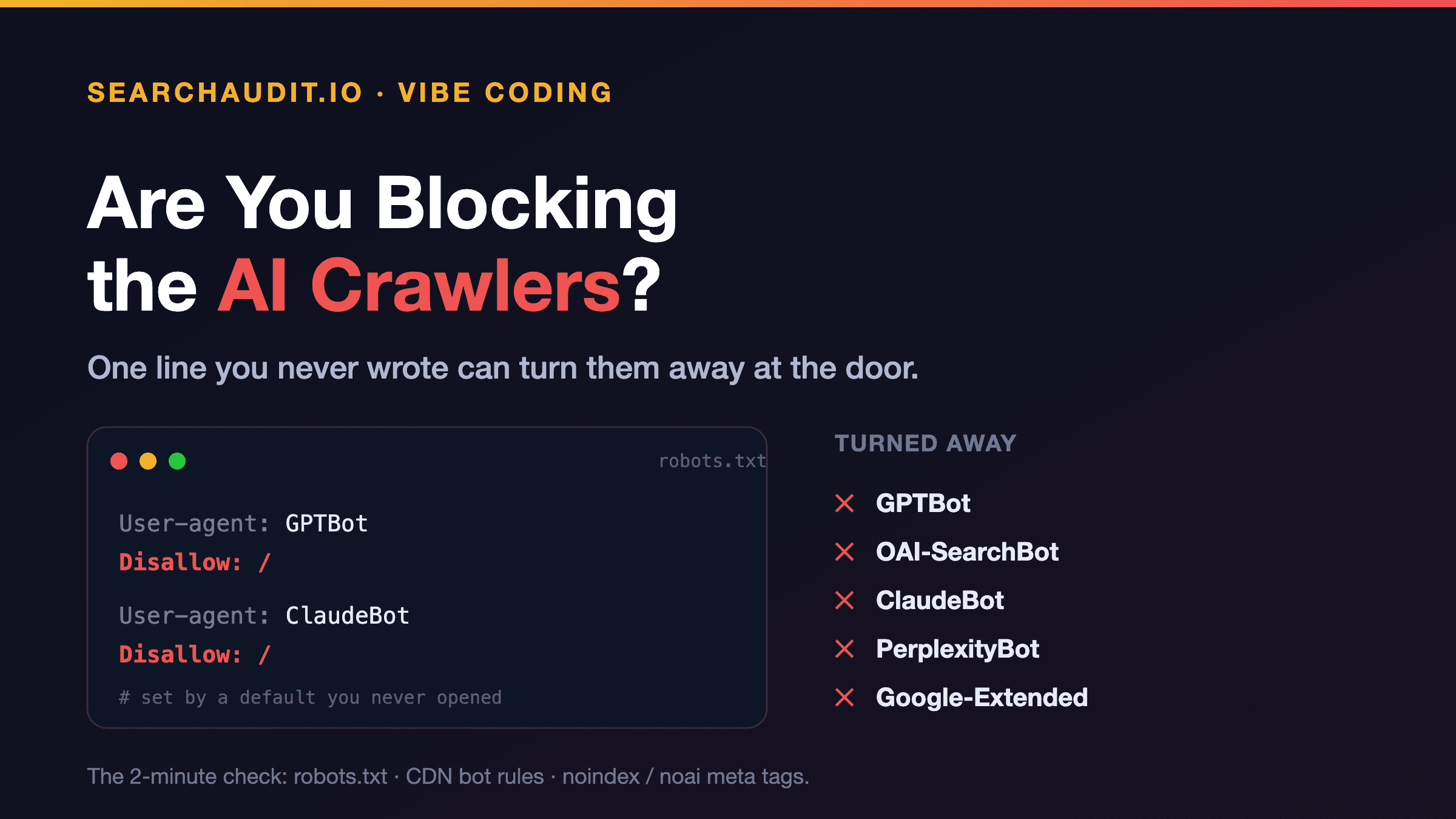
Can it retrieve you at all? Before anything else, the system has to be allowed to fetch your page. If your robots.txt, host, or a plugin is blocking the AI crawlers, you're out before the race starts — not ranked low, just absent. This is the gate most people don't even know exists.
Can it read you? If the crawler can reach your page but gets an empty shell — because the content only renders after JavaScript runs — there's nothing to cite. This is the single most common failure for vibe-coded sites, and we've broken down exactly why. Across the 301 sites we scored, it's a big part of why 83.4% came in under 50/100.
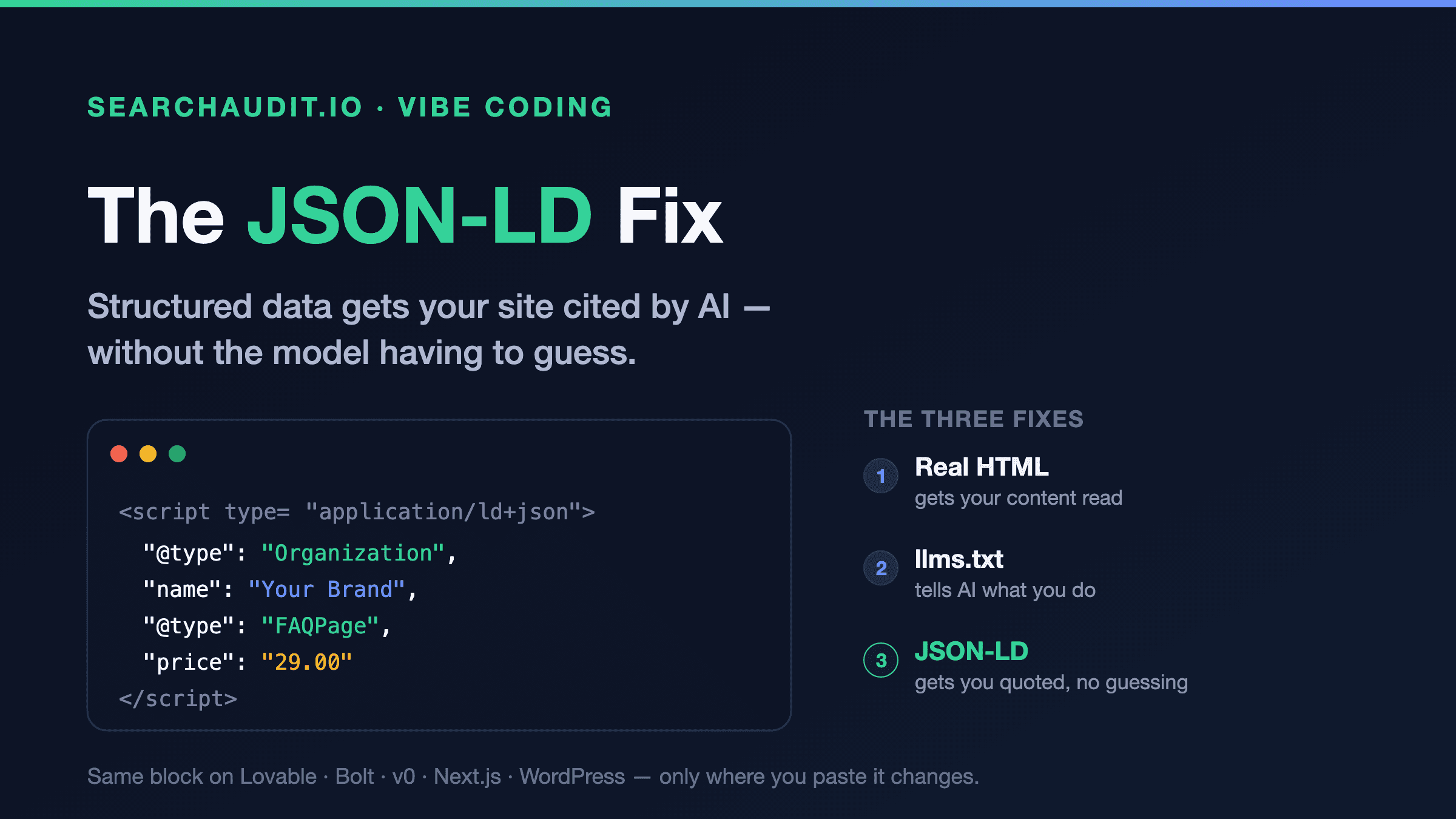
Does it understand what you are? Reading your words isn't the same as knowing who you are and what you do. A llms.txt and structured data state it plainly — this is the organization, this is the product, this is the price, these are the answers — so the model doesn't have to infer it from scattered clues. Clarity here makes you an entity it can recognize, not just text it skimmed.
Are you relevant to the exact question? Now it gets specific. The model isn't matching a keyword; it's looking for a page that actually answers the thing being asked. Pages that state a clear question and give a clear, direct answer — the way a good FAQ does — map cleanly onto how people phrase things to AI. Vague, roundabout, or buried answers lose to specific ones, even on the same topic.
Does it trust you enough to put your name on it? Citing a source is a small act of vouching, and models are tuned to be careful about it. What builds that confidence: consistency (your name, what you do, and your details line up everywhere they appear), corroboration (other sources say something compatible), and specificity (concrete, checkable claims read as more trustworthy than fluff). You don't need to be a giant — you need to be coherent and unambiguous.
Can it lift a clean, quotable line? The final gate is practical. Even a relevant, trusted page won't get cited if the useful bit is tangled in ten qualifiers. Models favor self-contained statements — a sentence that answers the question on its own, without needing the three paragraphs around it. Clear claims, plain structure, and stated facts are literally easier to quote, and easier-to-quote wins.
What this means for you
Notice the pattern: none of these six is about being clever or spending more. They're about being reachable, readable, understandable, relevant, trustworthy, and quotable — in that order. Most sites that never get cited aren't losing on step 5 or 6; they're falling out at step 1 or 2 and never reaching the interesting part. Fix the early gates and you're suddenly eligible, which is most of the battle.
That's also why the AI Visibility Score is built the way it is — it checks these same fundamentals rather than guessing at a mysterious algorithm. And it's why the fixes are boring in the best way: real HTML, access, llms.txt, structured data, clear answers. We walk through the how, on five different stacks, here.
Want to see which gate your site falls out at? Run a free audit — paste your URL, 60 seconds, no signup. You'll get your score and the specific issues standing between your site and a citation. If you want them fixed, the one-time $29 Fix Pass unlocks every fix for that site; for teams watching several, Pro ($79/mo, 5 domains) and Agency ($199/mo, 20 domains) do it at scale.
AI search isn't ranking you against nine others anymore. It's deciding, one gate at a time, whether to put your name in the answer. The good news is the gates are knowable — and most of them are yours to open.
(Figures reference SearchAudit's 301-site AI-visibility study. This piece is about presence and citation in AI answers, not traffic or Google rankings. Prices current as of publication — check the live pricing page.)