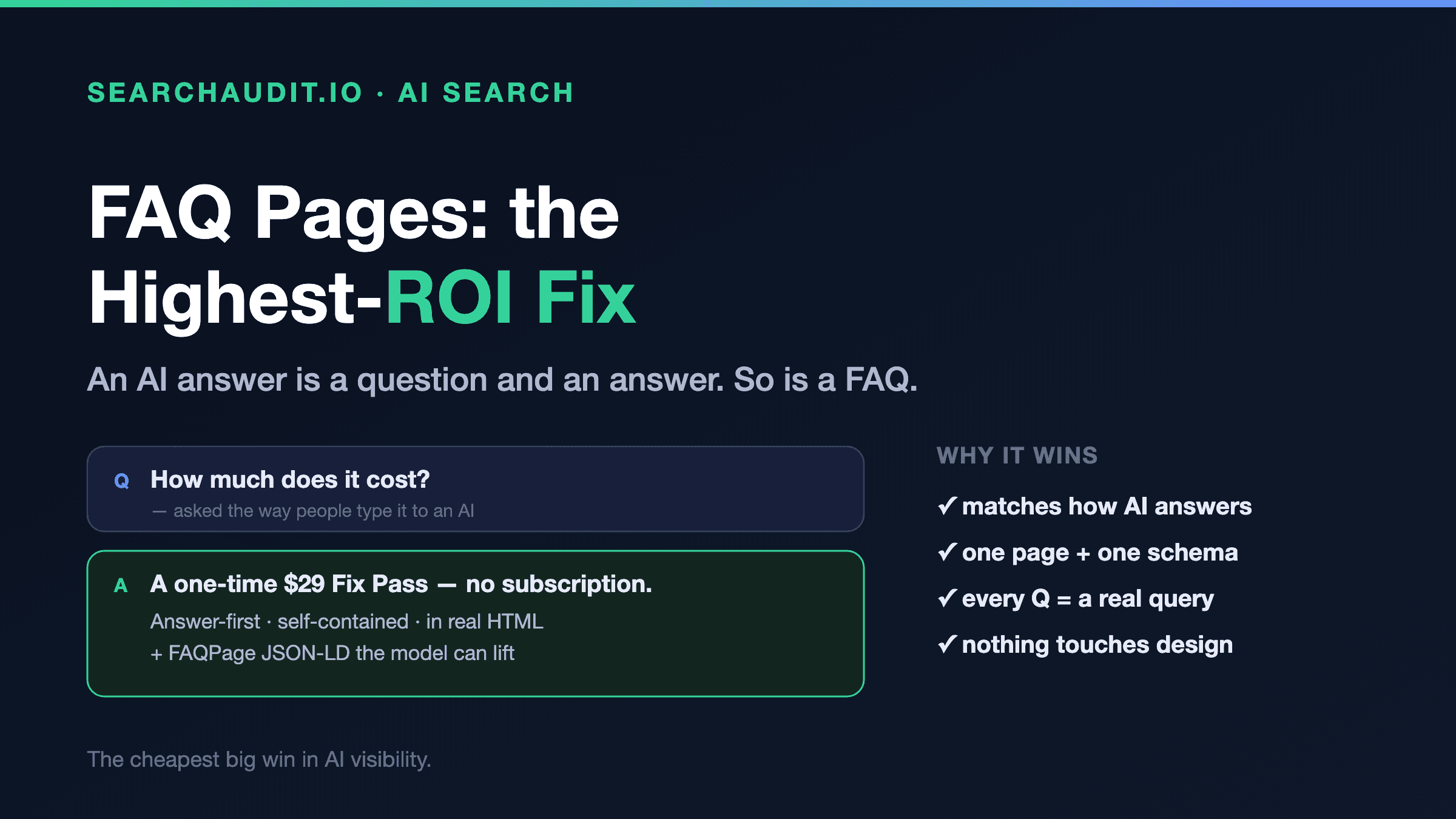
Here's a fact that should change how you think about your site: an AI answer is a question and an answer. Someone asks ChatGPT or Perplexity a full-sentence question, and the model composes a direct reply, naming a few sources. Now look at a well-built FAQ page. It's a list of real questions, each followed by a direct answer. It is, almost literally, pre-formatted AI-answer material.
That's why FAQ pages are the highest-ROI fix for AI visibility. They're small to build, they don't touch your design, and they line up with how AI search actually works better than almost anything else on your site.
Why FAQs map so cleanly onto AI search
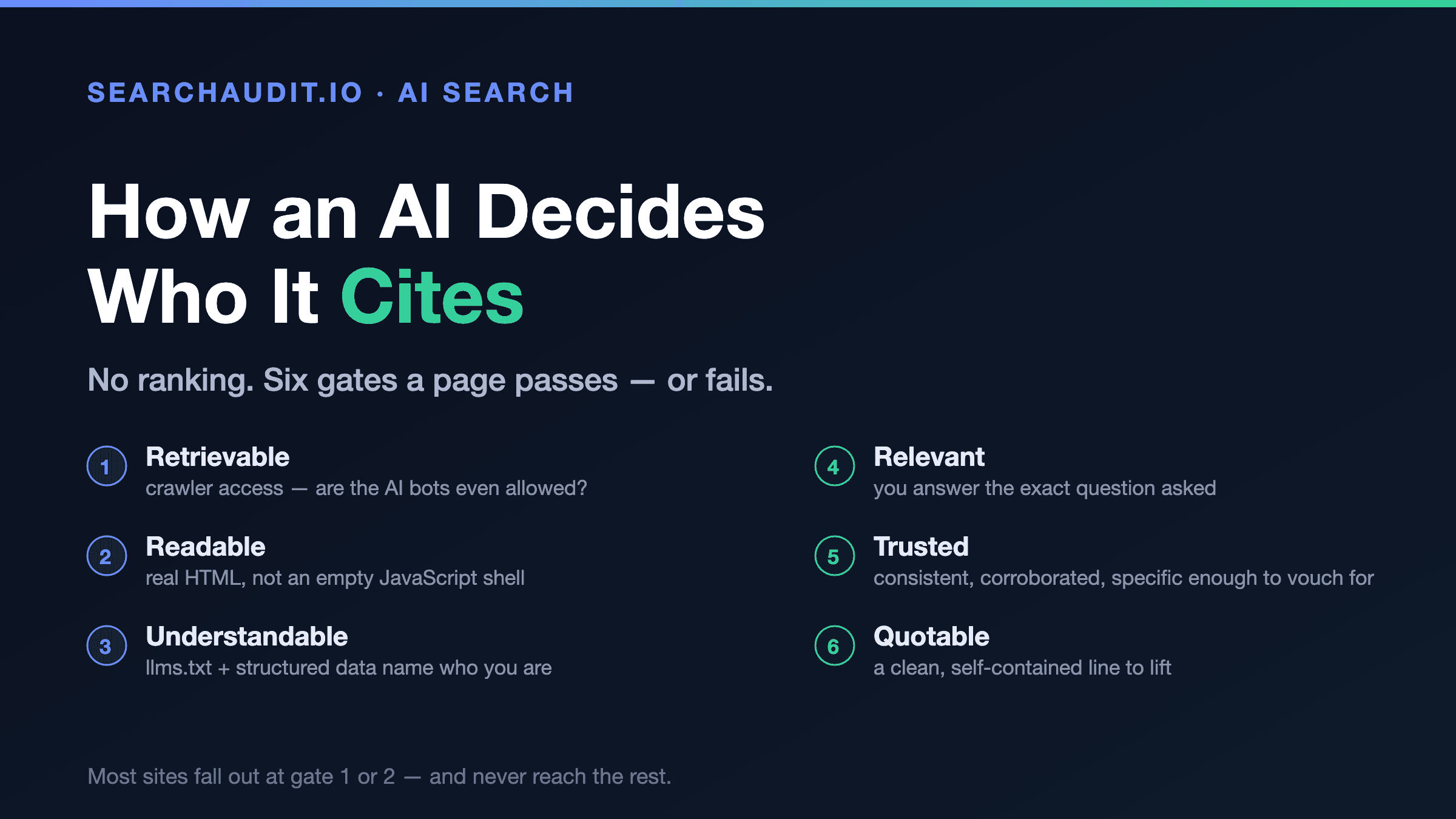
When an AI system decides who to cite, two of the last gates a page has to pass are relevance (do you actually answer the exact question asked?) and quotability (is there a clean, self-contained line to lift?). A FAQ entry is built to pass both. The question matches how a person phrases things to an AI, and the answer is a short, standalone statement the model can quote without dragging in three surrounding paragraphs.
Most pages make the model work for it — the answer to "how much does it cost" is scattered across a pricing table, a footnote, and a CTA. A FAQ hands it over on a plate.
What makes a FAQ page work for AI (not just humans)
Four things separate a FAQ that gets cited from one that just sits there:
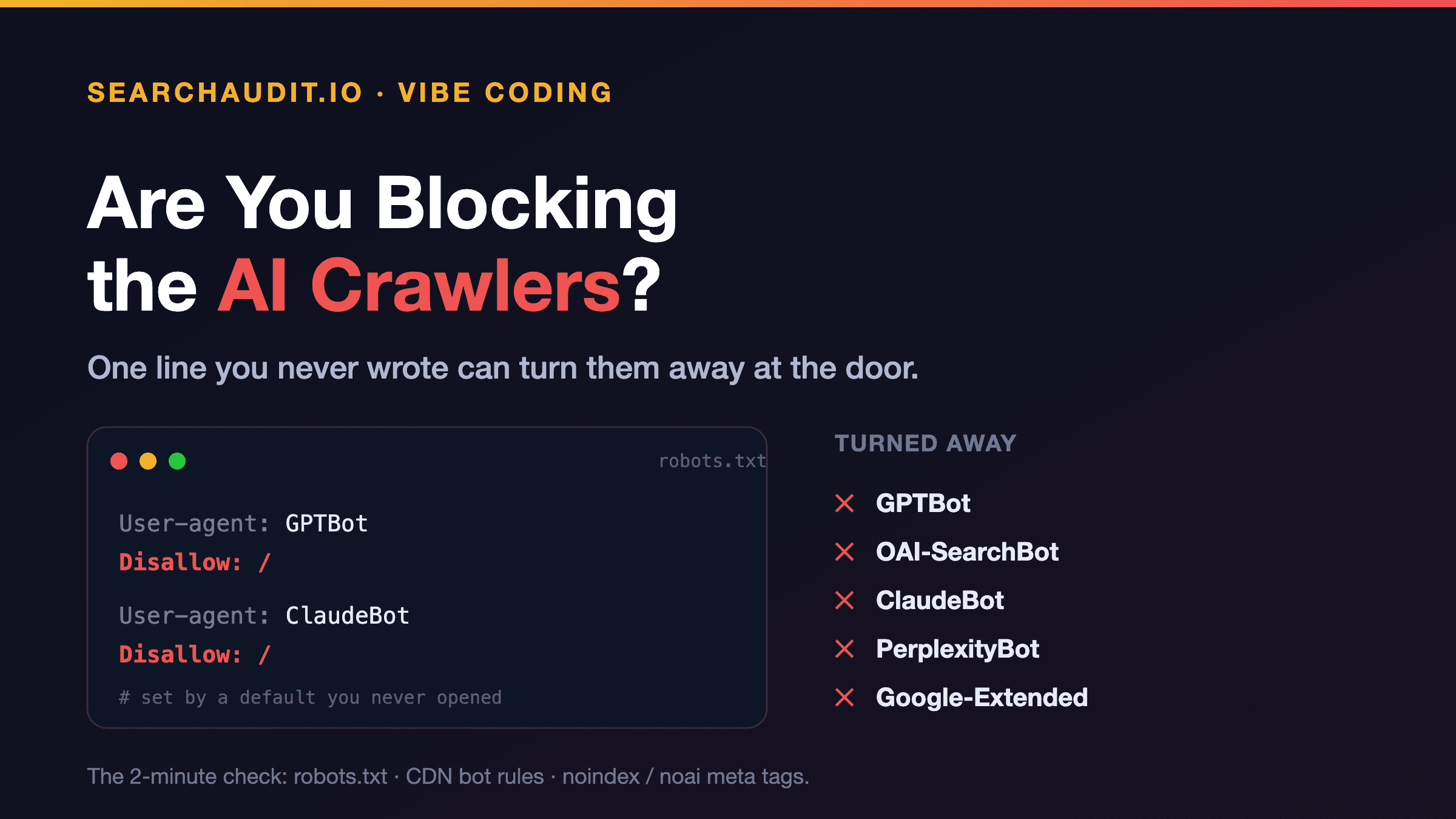
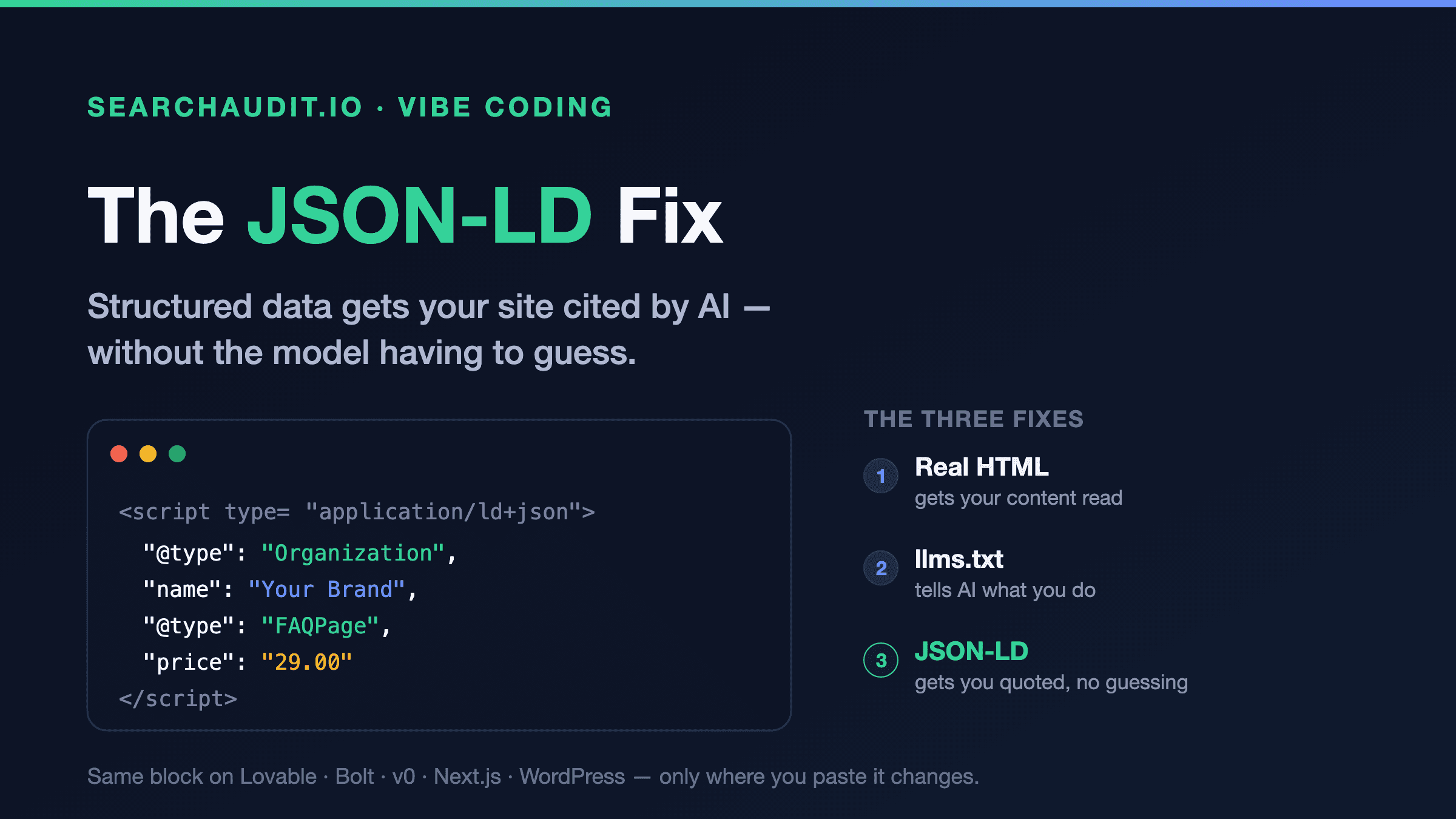
Real questions, phrased the way people ask them. "How much does it cost?" beats "Pricing." "Does it work with Lovable?" beats "Compatibility." Write the question in the words your customer would type into a chatbot. Answer-first. The first sentence answers the question, completely, on its own. Add detail after — but that opening line should stand alone, because that's the part that gets lifted. It has to be in the real HTML. If your FAQ is an accordion that only loads its answers when clicked — or renders after JavaScript — a crawler may get empty toggles. The questions and the answers need to be in the HTML the crawler receives, visible on load. Add FAQPage structured data. A FAQPage JSON-LD block hands the model your question/answer pairs already labeled — the single highest-leverage piece of schema you can add, because it maps one-to-one onto what AI answers are made of. One rule: the schema must match the questions and answers actually visible on the page.
Where to put them
Two places. A dedicated /faq page for the broad questions about what you do, pricing, and how you're different. And inline FAQ blocks on the pages that need them — a few questions at the bottom of your pricing page, your product page, a key feature page. Answer the questions buyers actually ask at the moment they're asking them.
Don't invent questions. Pull them from reality: your sales and support inbox, the "quick question before I buy" messages, the things people always ask on a call. Those are the exact questions being typed into AI too.
The mistakes that waste the effort
Fluffy answers. "We offer flexible, best-in-class solutions" answers nothing and gets cited by no one. Be concrete: a number, a yes/no, a specific. Questions nobody asks. A FAQ full of softballs you wish people asked is filler. Answer the real, slightly awkward ones — price, limits, "does it actually work with X." Hidden content. An accordion that hides answers from crawlers, or a schema block that describes questions that aren't on the page. Both quietly cancel the benefit.
The ROI part
A FAQ page is one page and one block of schema. That's the whole cost. In return, every question you answer well is a separate shot at matching a real query someone puts to an AI — and the answer is already written the way the model wants to quote it. Across the 301 vibe-coded sites we scored, thin, unstructured, hard-to-quote content was one of the most common reasons for a low score. A real FAQ page fixes several of those at once.
Want to see what your site is missing? Run a free audit — paste your URL, 60 seconds, no signup — and you'll get your AI Visibility Score and the specific gaps. If you want it done, the one-time $29 Fix Pass can generate your FAQ content and the matching FAQPage schema, ready to drop in.
AI search runs on questions and answers. A FAQ page is the one place on your site that speaks that language natively. That's why it's the cheapest big win you've got.
(Figures reference SearchAudit's 301-site AI-visibility study. This piece is about presence and citation in AI answers, not traffic or Google rankings. Prices current as of publication — check the live pricing page.)